Přečteno 16604x
-
Exclusively for AKTU: "Ordered criminal prosecution." Kaderka talks about pressure on funds from the NSA, the internal war in tennis, and the threat to Štvanice






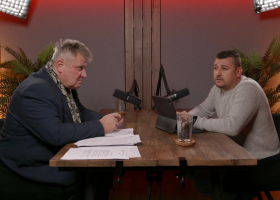
Former head of the Czech Tennis Association Ivo Kaderka, in an exclusive interview, describes his criminal prosecution as a deliberately fabricated "on order" case that, he says, is intended to open the way to tens of millions from public subsidies and the assets of Czech tennis. He claims that for years he faced wiretaps, a theatrical police raid, detention without a single interrogation, and pressure to hand over "tithes" from the National Sports Agency's funds, while the association today is dealing with fines and the return of subsidies amounting to tens of millions and there is even talk of a possible threat to the Štvanice stadium.
Why Kaderka spoke up and why right now
In the interview Kaderka explains that he decided to speak out after years of silence because, in his view, the public has been deliberately given only a one-sided picture of his case and a “brutal media campaign” full of lies. He says he does not like defending himself through the media, but feels obliged to explain “how it was” and to offer his version of the story.
He did not choose the platform by chance: according to him AKTU.cz and interviewer Jiří Forman are connected to his case by the issue of abusing criminal proceedings “on demand,” which Forman has long been covering in his reports. Kaderka says he wants to “reveal the truth” outside the tabloid sphere and place his story in the context of a broader problem with the functioning of the police, prosecutors and state administration in the area of grants. The interview was produced in cooperation with the YouTube channel Top Topics
From wiretaps to custody: “almost no investigation”
According to Kaderka, he was wiretapped and monitored for more than two years, including bugs in his office, car and home, and he still questions whether there was lawful authorization for the domestic wiretaps. In February 2024 the police, in the framework of the ČTS grants case, detained the association’s leadership and a court sent Kaderka and his close associate Vojtěch Flégl to custody.
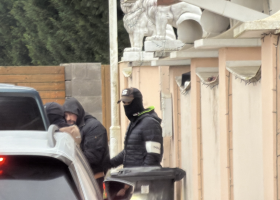
He describes the arrest itself as theatrical — handcuffed while taking his six-year-old son to school — and for him the key issue is his time in remand custody on grounds of collusion: he claims that for three months not a single investigator came to see him and not a single interrogation took place. He speaks of isolation, psychological pressure, significant weight loss and that the custody was more a tool for elimination than a standard phase of criminal proceedings, while the police and media portray the case as extensive grant frauds with possible damages in the tens of millions.
Four years of investigation, but no indictment
Kaderka points out that roughly four years have passed since the start of the investigation and an indictment still has not been filed, even though the raid and custody were among the toughest ever in Czech sport. According to official materials he faces charges of grant fraud and gaining an advantage in public procurement, with up to ten years’ imprisonment possible.
In the interview he counters this with his argument: he claims that the tournament organizer was not the recipient of grant funds, that the tournaments were held at customary prices and fully in accordance with the rules of the International Tennis Federation (ITF), which for example require a doctor within travel distance at smaller tournaments and a physiotherapist on site. According to him, the police and oversight bodies misunderstood sports regulations, which was then translated into suspicions of “unperformed services” and artificially inflated costs.
“An Eldorado for money”
A significant part of the interview revolves around the motives and pressure to take control of Czech tennis. Kaderka claims the association went through repeated audits, including by the Supreme Audit Office, without major criticisms, and yet a group of people developed for whom tennis became an “Eldorado for money” — thanks to large state grants and the association’s valuable assets.
He describes 2022 as a turning point, when he says pressure was put on him to join a project to “pull state money through the sports association and clubs” and to have regular “tithes” from NSA funds flow to specific people. Kaderka says he refused this pressure and had a notary draw up a record on 25 August 2022 that, according to him, documents criminal behavior by a senior official involved in sports grant policy; he intends to present the details in court.
Leak of NSA documents and the role of an investigative journalist
The National Sports Agency, which allocates and audits state grants for sports associations, also plays a key role in the story. According to Kaderka, an investigative journalist once physically brought confidential NSA materials into a sports hall in Prague, including detailed tournament accounts that were not supposed to leave the agency’s closed system.
Kaderka claims the NSA later confirmed the leak and informed about cooperation with the police, but the criminal complaint, which was supposed to concern 5–7 possible criminal offenses related to the document leak, was shelved very shortly after the police raid against him. The dropping of the case was justified by saying the materials were allegedly needed for the performance of the then-chairman of the NSA’s duties, which Kaderka calls absurd. He depicts the journalist as the instigator of the media campaign and as a witness in the case who, in another episode, sent defamatory material about a presidential candidate at night; the NCOZ dropped that without further steps.
Frozen share, administrator and company liquidation
After returning from custody Kaderka says his business was also interfered with. According to him the police seized his business share and the prosecutor appointed an administrator who removed him as managing director and for nine months did not nominate anyone in his place, causing the company to pay penalties and face sanctions.
The administrator then initiated liquidation of the company, arguing that “the company does not trade,” and appointed herself liquidator. Kaderka says he sees this as an attempt to cut him off from income and prevent him from financing his defense, so he filed lawsuits and is currently completing notifications for breach of duty in the management of another’s property.
War inside Czech tennis and the risk to Štvanice
Kaderka also launches heavy attacks against the current leadership of the Czech Tennis Association. He claims that ČTS chairman Jakub Kotrba prevented him from speaking at the general meeting and that the way voting was conducted reflected a “mirror of fear” rather than an open debate about how the association is defending itself in the grant case.
According to official information, the association must return and pay tens of millions of koruna due to NSA decisions and subsequent steps by the tax authority: in relation to the 2021 grant this involves returning roughly 19 million koruna and about 10 million in fines for breaching procurement rules.
Connections with NSA officials and “virtual fines”
Controversy, according to Kaderka, extends to personnel links between the NSA and the ČTS. He names the head of the grants department, who as an official allegedly used to “impose fines” on the tennis association and later, according to Kaderka, took part in work for the same association to fight those sanctions, which Kaderka sees as a closed and hard-to-control circle of interests.
He also questions the size and manner of awarding certain contracts — especially audit and consulting services — speaking of sums on the order of 6–7 million koruna without tender and with a role in setting parameters for grant drawing and tax representation. According to him this fits a scheme in which space is created around grant programs for “virtual fines” and subsequent “rescue operations” from which selected actors profit.
Money for Futures and sporting results
At the center of the case are NSA grants for organizing international tennis tournaments in the Czech Republic. According to Kaderka it was roughly 40 million koruna distributed across about 35 ITF Futures tournaments, crucial for collecting first ranking points and launching the careers of today’s top players.
Kaderka points out that since 2020 the association had a five-year support plan and in recent years helped produce three players in the ATP top 20, which he sees as evidence that the money was used effectively. The paradox, in his view, is that he is being criminally prosecuted precisely because of the tournament system that, by his account, led to the greatest sporting successes of Czech tennis in recent times.
The media image, ongoing grants and what comes next
Kaderka criticizes how major media adopted the narrative of “misconduct” and “schemes with hundreds of millions” without, he says, adequately explaining which years and decisions actually caused damage and what role different association leaderships played. He claims NSA documents for 2022–2023 confirm the association acted correctly and flawlessly under the former ČTS leadership. He sees the key failure as the deliberate and purposeful non-use of a defense in relation to the 2021 grant.
He also warns that some of the people he links to pressure for “tithes” and manipulation of grants remain active in the sporting environment and still have access to grant funds. Specific names and evidence — including the notarial record from 25 August 2022, details about the NSA document leak and file references of criminal complaints — he promises to present in court, where he says he will “show everything in black and white” and challenge the construction of the entire case.
-
Nejčtenější články