





Přečteno 26336x
In the 1990s he started an arms business. He founded a company with a license for foreign trade in military material, bought army surpluses, refurbished trucks and sold them for six-figure profits. In Olomouc bars he built an image of a dangerous "arms magnate", surrounded by police officers and people from the intelligence services
The turning point came with the so-called Olomouc case. In 1996 Přikryl accused elite police officers of extortion when handling an arms license. His criminal complaint set off a war among policemen, headlines about the mafia's penetration into the state and television shows. In the end he himself was acquitted, but since then one thing has held true: he is a master manipulator who can convince anyone that he stands on the right side.
-
Olomouc case (1996):
-
He accused elite police officers of extortion when processing an arms license, which unleashed a media "war of the police".
-
Despite the dispute, he was ultimately acquitted and gained a reputation as a master manipulator who can convince anyone of his version of the truth.
-
The case was full of forgeries and even bomb attacks, allegedly involving members of the BIS.
-
Later he threw himself into real estate. He speculated with land under the American radar in Brdy, and in Lošov near Olomouc he planned a satellite town called "Zlatý důl". If the zoning changes had passed, the investment could have appreciated up to sixteenfold. Authorities, locals and environmentalists opposed it — the project collapsed, but Přikryl kept going
Formally he is today deeply in debt. The central register of executions lists dozens of final executions against him, he is registered at the city hall's official address and together with his wife he is in insolvency. On paper he appears to be a person at the financial bottom.
But according to witnesses we spoke with, it's just a carefully constructed façade. Přikryl borrows millions from investors with stories about great projects — from waste processing to large development deals. He promises high returns, shows maps, contracts and contacts. In practice, however, the money is not returned.
One entrepreneur describes how he lent him two and a quarter million for a project in Uherské Hradiště. He scouted the terrain, verified the plots, everything looked real. But construction never began. The entrepreneur lost an apartment worth about two million, while Přikryl, according to him, "kept plugging one hole with another" — covering old debts with new loans and gambling.
A similar scenario was experienced by Vlastislav Římský, a man whom Aktu news has been following for a long time. Římský was under stress because something was brewing against him. According to witnesses, he came to Přikryl and asked him for help — whether Přikryl would assist Římský regarding criminal prosecution. In the end Přikryl obtained three million. Whether Přikryl actually helped Římský is not clear.
The loan of around three million went to debts. Zero repayments, court and enforcement. All creditors agree: Pikryl never comes empty-handed, he always has a story, a scheme, a secret contact. As convincingly as he once explained arms contracts to ministers, today he sells illusions of a sure profit.
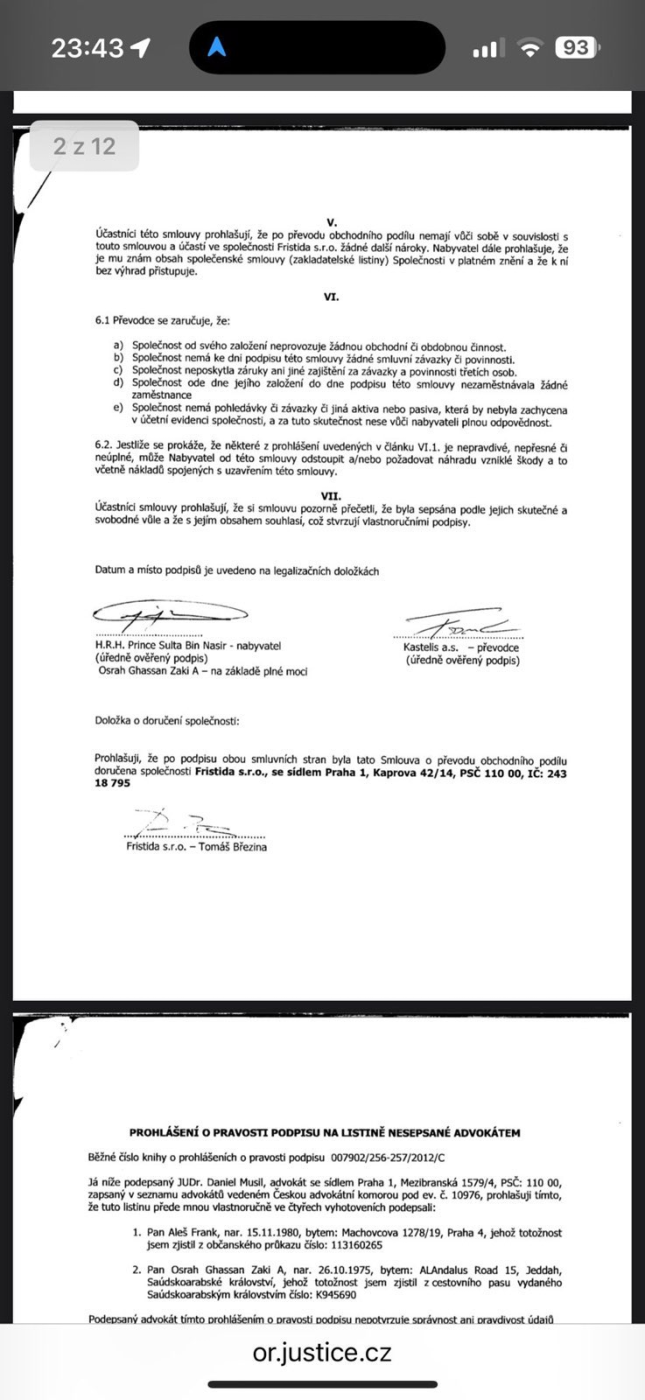
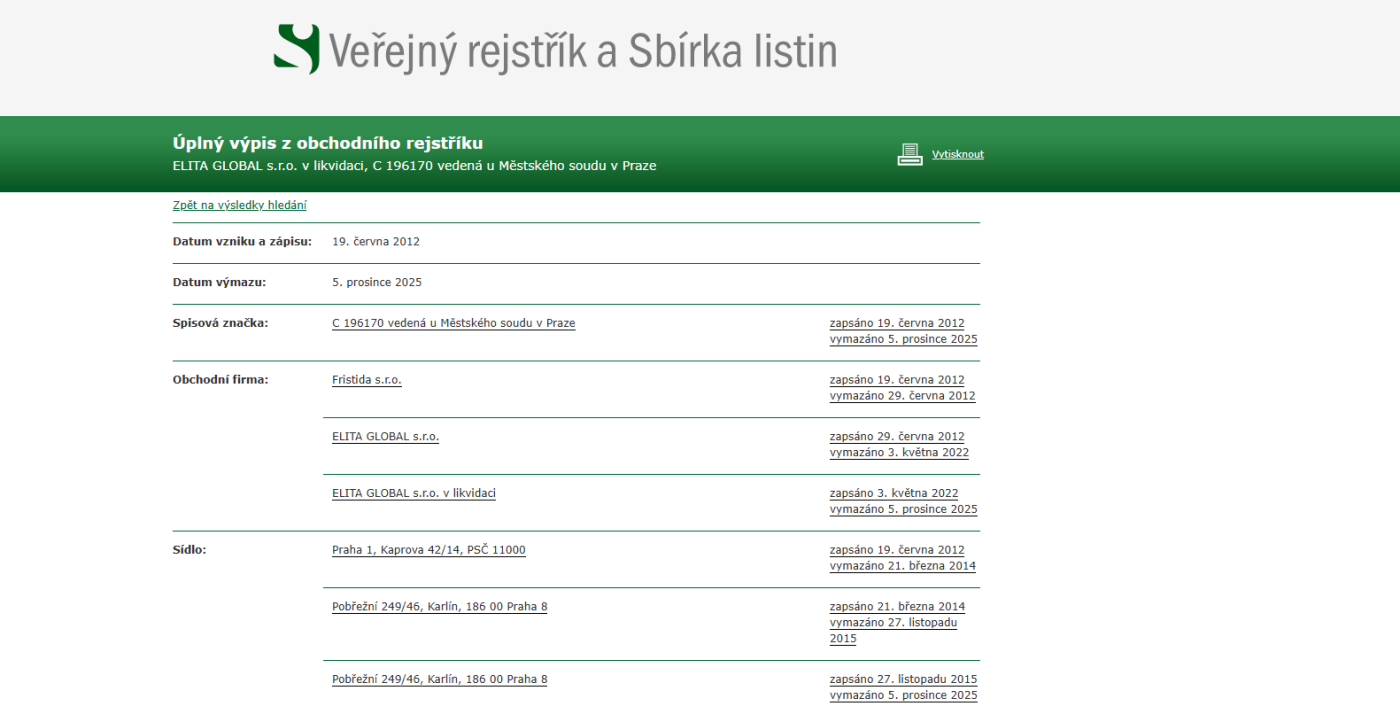
Saudi Arabia also enters the picture. In 2012 the company ELITA GLOBAL was established, where relatives of the Saudi royal family appear, for example Prince Sultan Bin Nasser Bin Nasser Bin Abdulaziz Al Saud, and the company's executive is Tomáš Březina — a longtime acquaintance of Přikryl. Witnesses say Přikryl used the company to create the impression that he had a descendant of the Saudi royal family behind him and billion-crown contracts ready in the region. And many times he managed to extract money this way. For example, for a project to build a ski resort in Saudi Arabia.
Prince Sultan Bin Nasser Bin Abdulaziz Al Saud
is a member of the Saudi royal family, referred to in English-language sources as H.R.H. Prince Sultan bin Nasser bin Abdulaziz Al Saud.
According to available information he mainly operates as a businessman: he is described as the owner and chairman (Owner and Chairman) of the Manayer Al‑Sultan International Group, which focuses on investments and business projects. In public encyclopedias like Wikipedia he is not yet developed as a well-known political or public figure — his relatives are more profiled (e.g. Crown Prince Sultan bin Abdulaziz or astronaut Sultan bin Salman), while he appears as a business-oriented prince with a lower media profile.
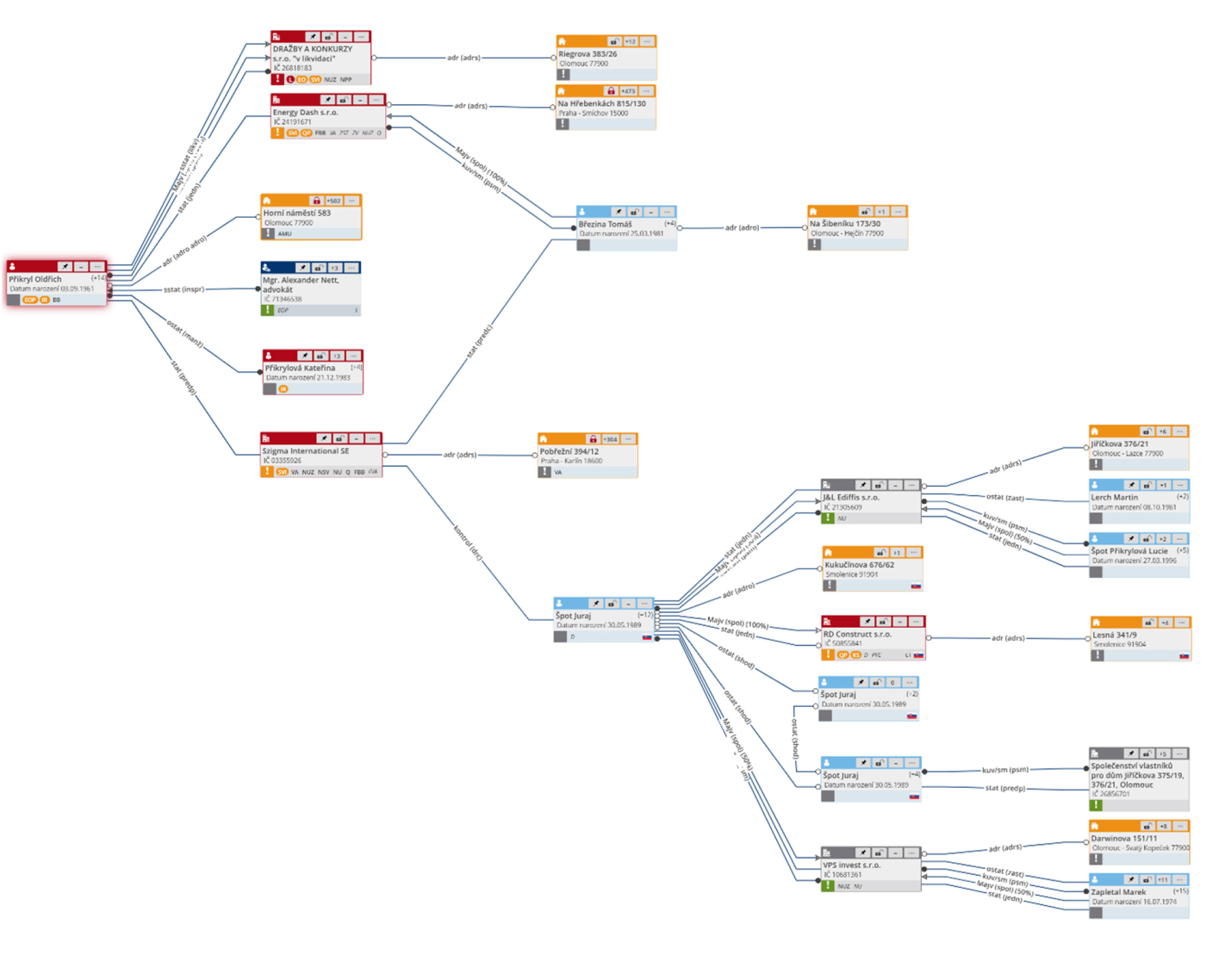
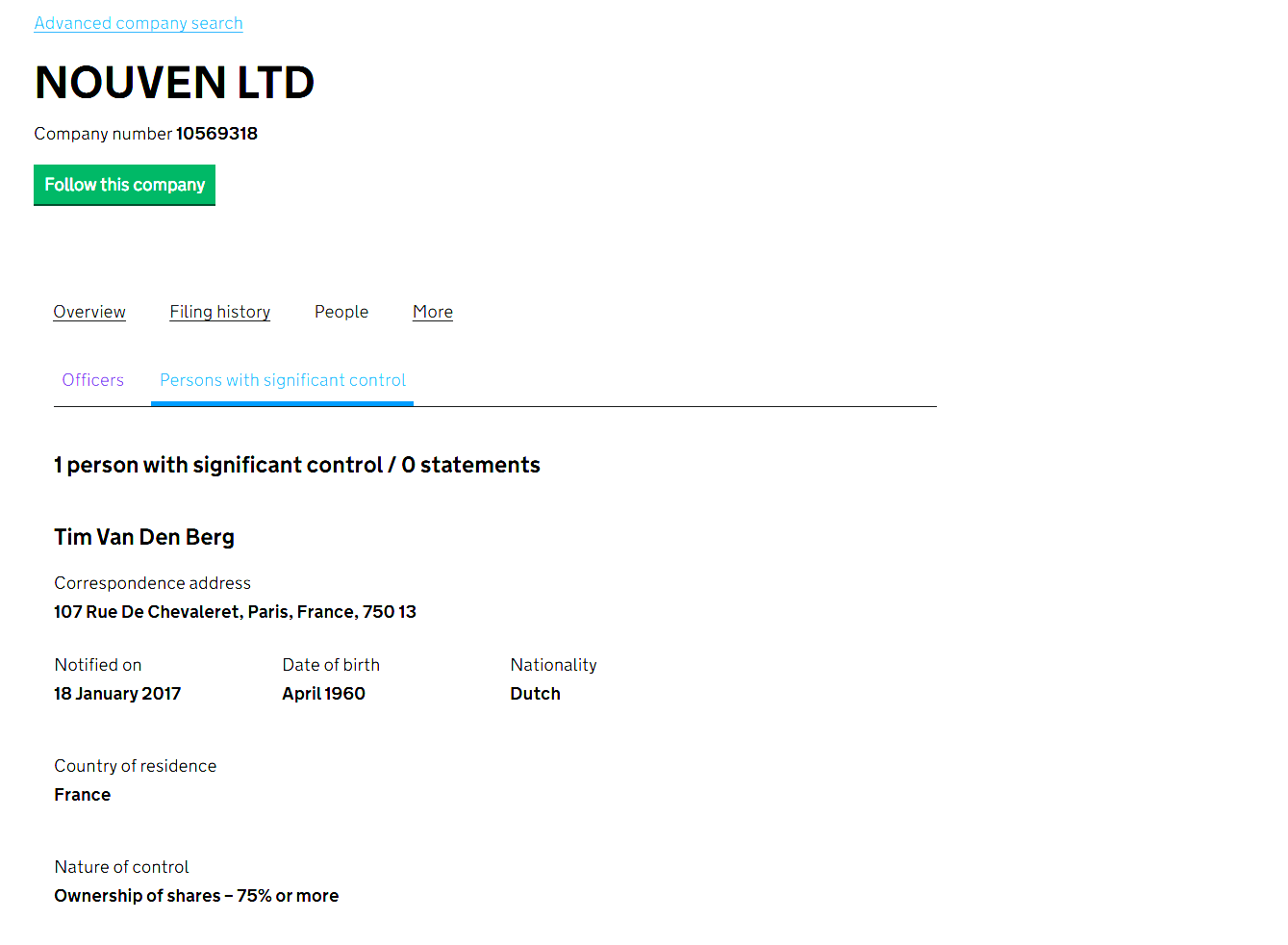
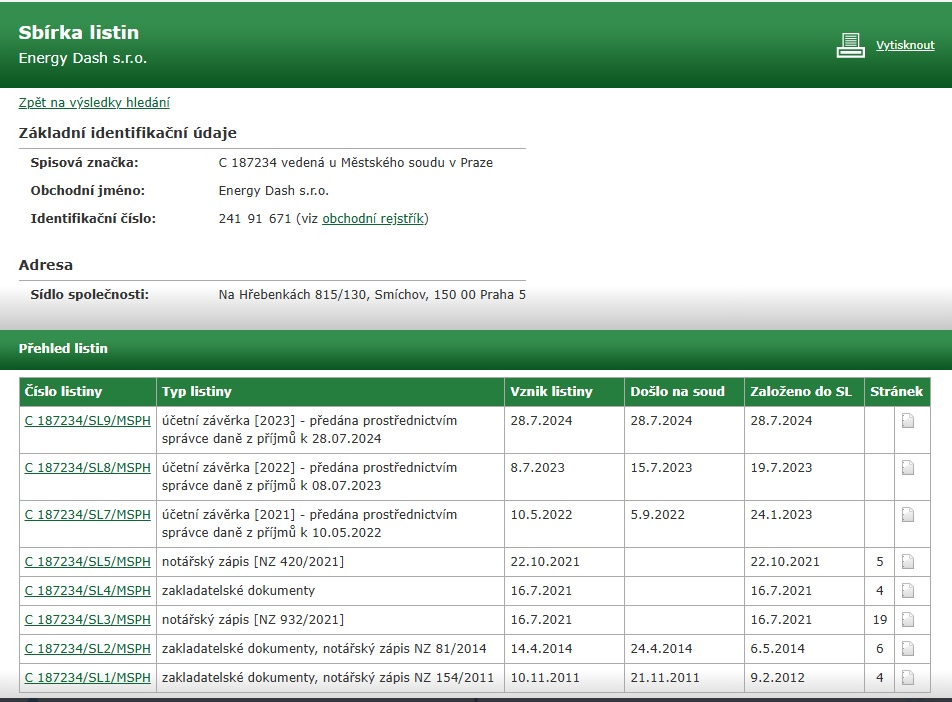
But there are more schemes. Energy Dash, a company linked to an American firm from Nevada where owners change like on a conveyor belt. Czech companies, American LLCs, alleged foreign managers who, according to registers, do not exist. For example the name Van den Berg. This is a fictitious person registered in the public registries of American and British companies. All roads, however, lead to a single name — Oldřich Přikryl and his closest people.
-
Use of complex structures and fictitious identities:
-
Elita Global (2012): A company featuring relatives of the Saudi royal family and with Přikryl's acquaintance Tomáš Březina as its executive. Přikryl allegedly uses it to create the impression of billion-crown contracts in Saudi Arabia (e.g. a ski resort), thereby obtaining funds.
-
Energy Dash and other companies: A complex network of Czech and American companies (LLCs) with alleged foreign managers who, according to registers, do not exist (e.g. the fictitious name Van Den Berg). All roads lead to Přikryl and his close associates.
-
And it is precisely his closest family that may hold the key to where the millions went. According to documents, Přikryl's daughter Lucie Špot Přikrylová owns stakes and properties that by far do not correspond to what she could legally have earned.
-
Transferring assets to family and daughter Lucie Špot Přikrylová:
-
Přikryl cannot have anything registered in his name because of his debts, so he transfers companies and land to his daughter.
-
Lucie Špot Přikrylová (20 years old) allegedly owns assets and shares that do not match her legal income (e.g. buying a stake in the company Levinhor for CZK 20,000 and selling it a month later for CZK 50 million).
-
Anti-corruption portals and financial units speak of possible asset stripping.
-
As a twenty-year-old she buys a stake in the company Levinhor for twenty thousand crowns. A month later she sells this stake for fifty million. The company is involved in a dispute over land worth more than two hundred million. While bailiffs and insolvency administrators are targeting the father, the daughter collects sums that would sustain an ordinary person for a lifetime.[
Anti-corruption portals and financial analysis units therefore speak of possible asset extraction. Pikryl cannot put anything in his name because of debts, so he transfers companies and land to his daughter. On paper he becomes a poor debtor, while his family lives at a standard that no legal job at their age would explain.
It is also surprising that the Brno insolvency court, despite creditors' insistence, still protects Přikryl. His insolvency administrator wanted to cancel the insolvency as well. Přikryl and his wife do not attend court proceedings. Their legal representative always has some excuse.
According to information, private detective agencies, Russian traders to whom someone owes money and even U.S. government agencies are now circulating around Přikryl and his dubious business. They are all putting together a mosaic: foreign companies, fake executives, repeated sales of the same plots, mysterious transfers of money to a young woman's accounts. They are waiting for Přikryl to make another move that can no longer be covered up.
Oldřich Pikryl meanwhile disappears from the radar. He changes phones, alternates addresses, formally owns nothing. Yet according to witnesses he continues to deal with new investors, continues to promise high returns from projects abroad and continues to use his ability to gain anyone's trust within minutes of sitting at a table.
The story of Oldřich Pikryl is a warning. It shows how easily the image of a successful entrepreneur, contacts in Saudi Arabia and big development visions can be abused to make other people's money disappear. And it also shows how weak the system is that allows a person with dozens of executions and insolvency proceedings to keep transferring assets to his family and hunting for new victims.